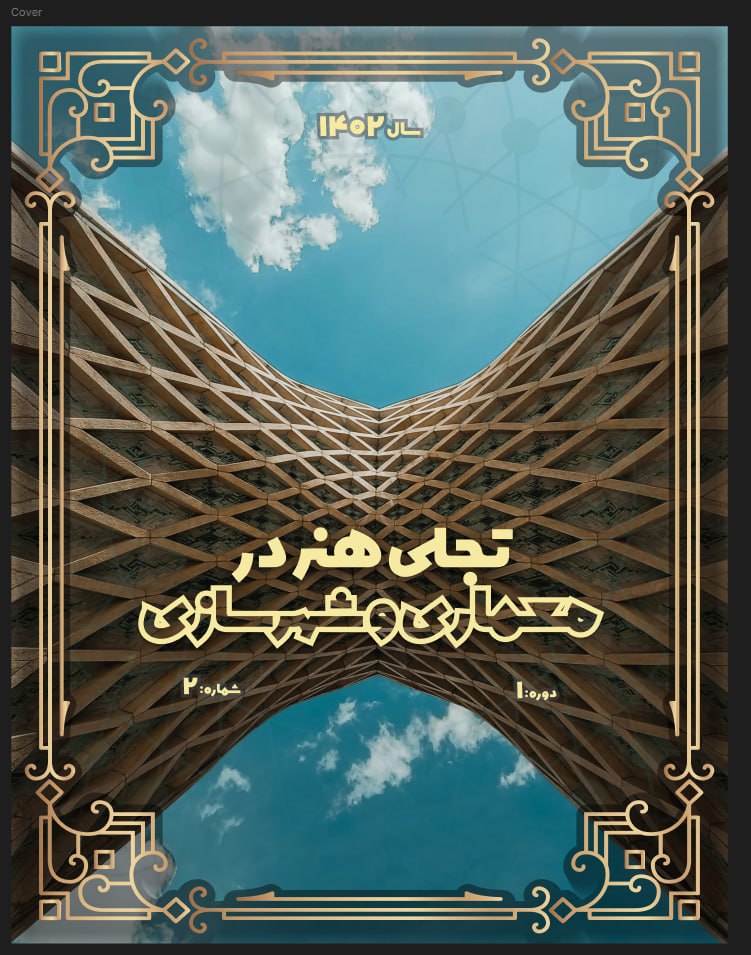
واکاوی نسبت مینیاتور و پرسپکتیو با معماری رنسانس و معماری ایرانی: رویکردی پدیدارشناختی با تحلیل گفتمان انتقادی
کلمات کلیدی:
مینیاتور ایرانی, پرسپکتیو خطی, معماری رنسانس, معماری ایرانی, پدیدارشناسی, تحلیل گفتمان انتقادی, عالم خیالچکیده
روایتهای تکاملی در تاریخ هنر، پرسپکتیو خطی رنسانس را نقطهاوج بازنمایی فضا و مینیاتور ایرانی را مرحلهای بدوی قلمداد کردهاند. این پژوهش این پرسش را مطرح میکند که آیا این دو، دو دستگاه ادراکی مستقل هستند یا یکی پیشرفتهتر از دیگری است. پژوهش حاضر با رویکرد کیفی و نظری بنیادین، چهار گفتمان اصلی پرسپکتیو (پانوفسکی، دامیش، لکان و مرلوپونتی) را با تلفیق پدیدارشناسی ادراک مرلوپونتی و تحلیل گفتمان انتقادی سهسطحی فرکلاف تحلیل کرده است. دو نمونه معماری شاخص – کلیسای سانتا ماریا نوولا در فلورانس و مسجد شیخ لطفالله در اصفهان – در سه سطح توصیف، تفسیر و تبیین بررسی شدهاند. پرسپکتیو خطی در معماری رنسانس در قالب پلان مرکزی متقارن، گنبد بهمثابه نقطه کانونی، نور یکنواخت و نقش مرکزی سوژه (اومانیسم) تجسم یافته است. در مقابل، منطق ادراکی مینیاتور در معماری ایرانی اسلامی به صورت حیاط مرکزی با ایوانهای ناهمسطح، ادراک بدنمند و چندحسی، نور متغیر و زمانمند، کیاسم (درهمتنیدگی بدن و جهان) و ناظر متحرک متجلی شده است. مینیاتور و پرسپکتیو دو دستگاه ادراکی مستقل با مبانی هستیشناختی متفاوت هستند؛ مینیاتور مبتنی بر «عالم خیال» و عرفان اسلامی و پرسپکتیو مبتنی بر اومانیسم و عقلگرایی غربی. ناکارآمدی پرسپکتیو خطی در بازنمایی مینیاتور ناشی از تفاوت معرفتی است، نه ضعف فنی. نظریه «نسبت گفتمانی و چندلایه» به عنوان چارچوب نظری جدید ارائه میشود. پژوهش به دو نمونه معماری محدود است. مطالعات تطبیقی میانفرهنگی با رویکرد پدیدارشناختی در دورههای دیگر پیشنهاد میشود.
دانلودها
مراجع
1. Panofsky E. Perspective as Symbolic Form. Wood CS, editor: Zone Books; 1991.
2. Damisch H. The Origin of Perspective. Goodman J, editor: MIT Press; 1995.
3. Azhand Y. History of Iranian Painting: SAMT; 2008.
4. Foroutan M. Architecture in Iranian Miniature Painting. Golestan-e Honar. 2005;2:75-85.
5. Alcayde Egea R. Perspective and Vision: On the Centenary of Erwin Panofsky's Perspective as Symbolic Form. EGA Expresion Grafica Arquitectonica. 2024;29(50):288-301.
6. Aghaie A, Piravi Vanak M. The Metaphysic of Encounter of Space at the Meet of Persian Miniature with Renaissance Painting. Journal of Art and Civilization of the Orient. 2015;3(9):15-24.
7. Merleau-Ponty M. Phenomenology of Perception. Landes DA, editor: Routledge; 2013.
8. Pallasmaa J. The Eyes of the Skin: Architecture and the Senses. 3rd ed: Wiley; 2012.
9. Mesbah M. The Imaginal World in Transcendent Theosophy: Imam Khomeini Educational and Research Institute; 2001.
10. Nasr SH. Islamic Art and Spirituality. Ganji R, editor: Hekmat; 1996.
11. Heidegger M. Being and Time. Stambaugh J, editor: State University of New York Press; 2010.
12. Bachelard G. The Poetics of Space. Jolas M, editor: Beacon Press; 1994.
13. Norberg-Schulz C. Genius Loci: Towards a Phenomenology of Architecture: Rizzoli; 1980.
14. Cassirer E. The Philosophy of Symbolic Forms. Manheim R, editor: Yale University Press; 1955.
15. Lacan J. The Four Fundamental Concepts of Psycho-Analysis. Sheridan A, editor: Penguin Books; 1979.
16. Merleau-Ponty M. The Visible and the Invisible. Lingis A, editor: Northwestern University Press; 1968.
17. Zeki S. Inner Vision: An Exploration of Art and the Brain: Oxford University Press; 1999.
18. Livingstone M. Vision and Art: The Biology of Seeing: Abrams; 2014.
19. Memarian GH. Iranian Architecture: A Critical Study: Soore Mehr Publications; 2017.
20. Alberti LB. On the Art of Building in Ten Books. Rykwert J, Leach N, Tavernor R, editors: MIT Press; 1988.
21. Nasr SH. Islamic Art and Spirituality: State University of New York Press; 1987.
22. Corbin H. Creative Imagination in the Sufism of Ibn Arabi. Manheim R, editor: Princeton University Press; 1969.
23. Marks LU. Real Images Flow: Mulla Sadra Meets Film-Philosophy. Film-Philosophy. 2016;20(1):24-46.
24. Mofid M. Ontology of Religious Art: A Phenomenological Approach to Iranian Miniature Painting: Research Institute of Culture and Art; 2021.
25. Fairclough N. Critical Discourse Analysis: The Critical Study of Language: Longman; 1995.
26. Karanakov B, Radevski A. The Inverse Perspective as a Symbolic Form. Faculty of Computer Science and Engineering, Skopje; 2022.
27. Blum G. Fenestra Prospectiva: Architektonisch Inszenierte Ausblicke: Alberti, Palladio, Agucchi: De Gruyter; 2015.
28. Arnheim R. Art and Visual Perception: A Psychology of the Creative Eye: University of California Press; 1979.
29. Lynch K. The Image of the City: MIT Press; 1960.
30. Gibson JJ. The Ecological Approach to Visual Perception: Houghton Mifflin; 1979.
31. Dovey K, Dovey K. Habitus and the Silent Complicity of Architecture. Habitus: A Sense of Place: Routledge; 2017. p. 267-80.
32. Bourdieu P. Outline of a Theory of Practice. Nice R, editor: Cambridge University Press; 1977.
33. Dovey K. The Silent Complicity of Architecture. In: Hillier J, Rooksby E, editors. Habitus: A Sense of Place. 2nd ed: Routledge; 2017. p. 267-80.
34. Husserl E. Ideas Pertaining to a Pure Phenomenology and to a Phenomenological Philosophy. Kersten F, editor: Martinus Nijhoff; 1982.
35. Said EW. Orientalism: Pantheon Books; 1978.
36. Grabar O. Islamic Visual Culture, 1100-1800: Routledge; 2020.
37. Ghaderi P. Non-Spaces (Recessive Interstitial Ones!): HDK-Valand; 2025.
38. Spivak GC. Can the Subaltern Speak? In: Nelson C, Grossberg L, editors. Marxism and the Interpretation of Culture: University of Illinois Press; 1988. p. 271-313.
39. Kafshchian Moghadam A, Mansouri A, Shamsizadeh Maleki R. Analysis of Architectural Representation Systems in Safavid Miniature Painting. Islamic Art Studies. 2013;18(4):53-70.
دانلود
گاهشمار انتشار
- ارسال
- بازنگری
- پذیرش
شماره
نوع مقاله
مجوز
حق نشر 2025 Farinaz Parhizkari (Author); Mansour Nikpour; Reza Afhami, Mahdiyeh Moeini (Author)

این پروژه تحت مجوز بین المللی Creative Commons Attribution-NonCommercial 4.0 می باشد.